Your Guide to Common Soft Tissue Injuries
Before we talk about treatment, it helps to understand what a sprain or strain actually is.
Sprains and strains are common soft tissue injuries that can happen during sport, exercise, work or everyday activities.
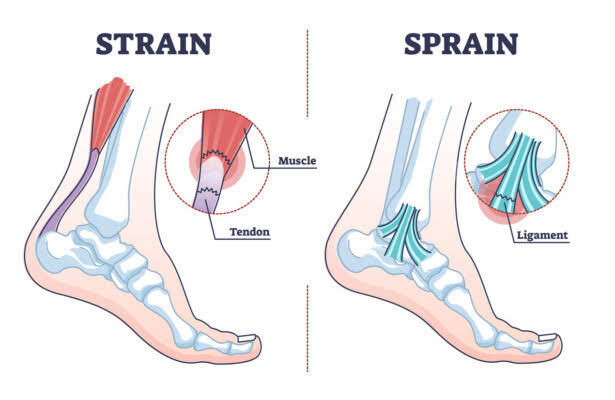
A sprain happens when a ligament is stretched or torn. Ligaments are strong bands of tissue that connect bones and help support your joints. Sprains commonly affect the ankle, knee and wrist.
A strain affects a muscle or tendon. Tendons connect muscles to bones. Strains commonly occur in areas such as the calf, hamstring and groin.
Both sprains and strains can cause:
Pain or tenderness
Swelling
Bruising
Stiffness
Difficulty moving or using the affected area
The severity can vary. Some injuries are mild and settle quickly, while others involve a more significant tear and take longer to recover.
You may also have experienced what is often called a ‘niggle’ — a mild ache or discomfort that does not have a clear diagnosis. While a niggle may not be a major injury, it is often a sign that something needs attention.
What Happens After a Soft Tissue Injury?
When you injure a muscle, ligament or tendon, your body immediately starts its natural healing process.
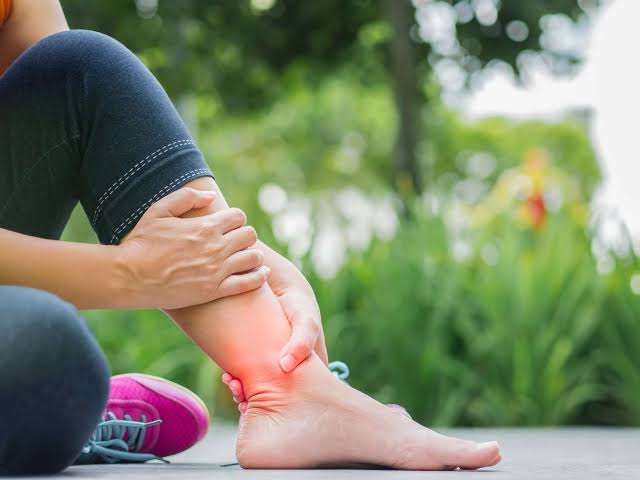
Part of this process is inflammation. You may notice swelling, warmth, redness, tenderness or pain around the injured area. These are normal responses as your body works to repair the damaged tissue.
Inflammation is a complex part of the body’s natural healing process.
The aim of early injury management is not to stop inflammation completely. Instead, the goal is to manage pain and excessive swelling while protecting the injured area from further damage.
This is where R.I.C.E. can be useful.
R.I.C.E.: What to Do in the First 72 Hours
You may have heard of the R.I.C.E. method for managing a sprain or strain and stands for:
R – Rest
I – Ice
C – Compression
E – Elevation
These simple measures have been used for many years to help manage soft tissue injuries.
R - Rest
Rest means giving the injured area a break and protecting it from activities that make your symptoms worse.
For example, if it hurts to put weight on your ankle, avoid activities that increase your pain. If you have hurt your shoulder, you may need to temporarily avoid heavy lifting or repeated overhead movements.
However, rest does not mean staying completely still.
Once it is comfortable to do so, gentle movement can help prevent stiffness and keep the area moving. Think of it as relative rest — reducing activities that aggravate your injury while continuing gentle movement within your comfort level.
The goal is to protect the injury without completely stopping movement.

C – Compression
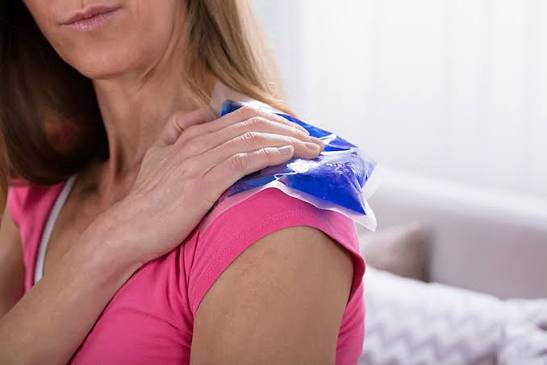
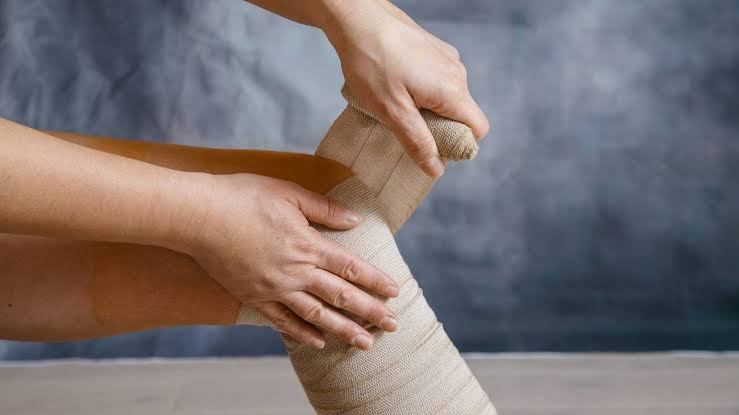
Compression can help reduce swelling and provide some support to the injured area.
An elastic or crepe bandage can be wrapped around the injured area. It should feel firm and supportive, but not too tight.
If you notice:
- Numbness or tingling
- Increased pain
- Your fingers or toes becoming pale, blue or cold
the bandage may be too tight and should be loosened or removed.
If you are unsure how to apply compression safely, ask your physiotherapist or another healthcare professional for advice.
I - Ice
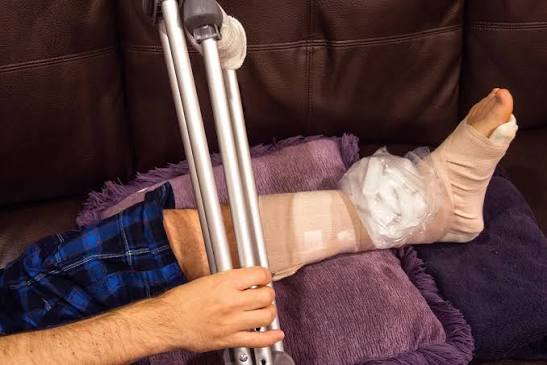
A cold pack or ice can help reduce pain and may help manage swelling during the early stages of an injury.
If you use ice, always protect your skin by placing a thin towel or damp cloth between the ice pack and your skin.
Apply ice for up to 20 minutes at a time, then allow the skin to return to its normal temperature before applying it again. This can generally be repeated every few hours during the first couple of days.
Remember that ice is mainly used to help with pain and comfort. It does not heal the injury on its own, and there is no need to keep the area constantly iced.
E – Elevation
Elevation means raising the injured area above the level of your heart where possible. This can help reduce swelling by encouraging fluid to move away from the injured area.
For an ankle or knee injury, you could lie down and support your leg with cushions or pillows.
For a wrist or hand injury, rest your arm on a pillow when sitting or lying down.
Elevation can be particularly helpful during the first 24 to 48 hours, especially when swelling is noticeable
Is R.I.C.E. Still Recommended?
You may have heard that advice about treating sprains and strains has changed over the years.
Newer approaches, including PEACE and LOVE, place more emphasis on education, gradual movement and progressively loading the injured area as it recovers.
This does not mean that R.I.C.E. is necessarily wrong.
Instead, modern injury management recognises that too much rest or too much icing is not the goal. Your body needs some inflammation to support healing, and appropriate movement is an important part of recovery. For many minor injuries, R.I.C.E. can still provide a simple way to manage pain and swelling during the first few days.
The right approach will depend on your injury, how severe it is and how you are progressing. A physiotherapist can assess your injury and guide you through the appropriate stages of recovery.
When Should You See a Physiotherapist or Doctor?
Most minor sprains and strains improve with time and appropriate care. However, some injuries require further assessment.
You should seek professional advice if:
- You cannot put weight through the injured area
- There is significant swelling or bruising
- The area looks deformed
- You heard or felt a ‘pop’ or ‘crack’ when the injury happened
- Your pain is severe or continues to get worse
- You have numbness or tingling
- Your symptoms are not improving after several days
- You are unsure how serious your injury is
These symptoms can sometimes indicate a more significant injury, such as a serious ligament or muscle tear, or even a fracture.
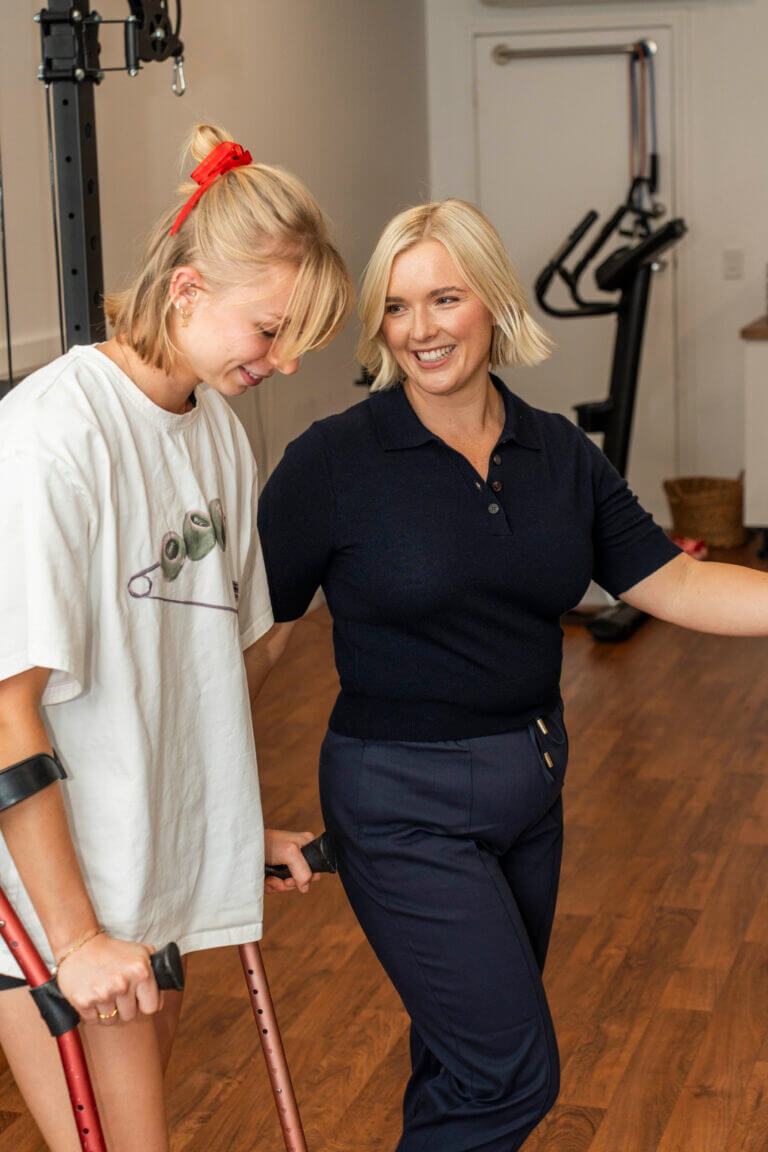
For less serious injuries, seeing a physiotherapist can still be helpful. Book an appointment with Wellers Hill Physio today and take the first step towards getting back to doing what you love. Your physiotherapist may also provide exercises to help restore strength, movement, balance and coordination, helping you return to the activities you enjoy and reduce your risk of future injury.
Get Back to Doing What You Love
If you have a sprain, strain or niggle that is not settling, the team at Wellers Hill Physio can help.
We provide personalised physiotherapy assessment and treatment based on your injury, your lifestyle and your goals.
You do not have to wait for a small problem to become a bigger one. Book an appointment with Wellers Hill Physio today and take the first step towards getting back to doing what you love.