Become Your Own Physio: Knee Pain During Squats
Knee pain during a squat is rarely just a knee problem; it is usually a compromise in how the hip, knee, and ankle joints share the load. You can self-assess your lower body at home by comparing side-to-side mobility, stability, and strength using straightforward functional movement tests.
Why Your Knees Hurt When You Squat
The knee is a middle-man joint. It simply follows the instructions given by the hip above it and the ankle below it. When you feel pain at the front or inside of the knee during a squat, it is often due to a “cheat pattern” like knees collapsing inward (valgus), hips dropping out, weight shifting unevenly, or limited ankle mobility forcing excess forward knee travel.
Important Safety Rule!
- Stop the test immediately if you feel sharp or worsening knee pain.
- Compare your painful leg to your non-painful leg to spot differences in strength or control.
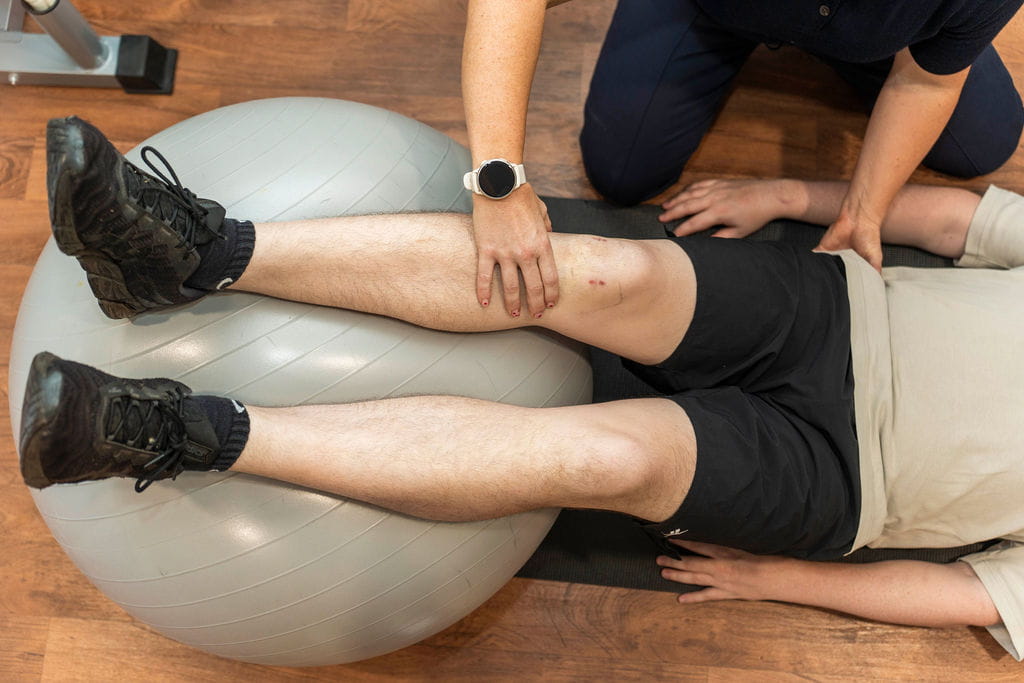
Step-by-Step Home Self-Assessment
1. Ankle Mobility: The Knee-to-Wall Test
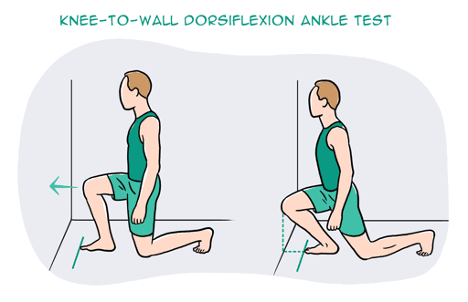
Ankle stiffness prevents your shin from moving forward, which forces your heel to pop up or your hips to bend forward.
- How to test: Stand facing a wall. Place your toes about 12 cm away from the baseboard. Keeping your heel flat on the floor, bend your front knee forward to touch the wall.
- What to watch for: Does your heels lift? Does your hip turn in?
- Goal: You should be able to touch your knee to the wall from at least 10 to 12 cm without your heel lifting. Compare both sides; a difference greater than 2 cm or an inability to reach 10 cm indicates restricted dorsiflexion
What the results of the tests mean:
Poor Ankle mobility and tightness in the calf.
- The Cause: Tightness in the calf can limit how much your ankle can dorsiflex or bend up your ankle.
- The Knee Pain link: To get your body low enough during a squat, the ankle will bypass the stiffness by flattening out (pronating) your foot. This in turns causes internal rotation at the shin and pulls the knee joint inward, which can increase pressure around the knee cap.
2. Hip Strength Test: Single-Leg Glute Bridge
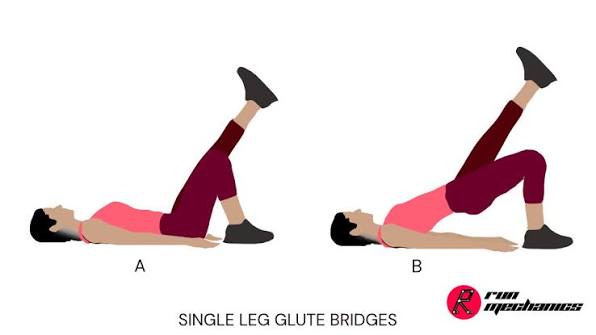
This test checks the strength of your glutes (hip extensors) and core stability without putting pressure on your knee joint.
- How to do it: Lie on your back with your knees bent and feet flat on the floor. Lift one leg straight up into the air. Push through the heel of the foot on the floor to lift your hips up until your body forms a straight line. Lower your hips slowly back down.
- What to watch for: Does your hip drop on the floating side? Do you feel it mostly in your glute or your lower back?
- Goal: Aim for 15 steady repetitions on each side before fatigue or form breakdown. If your knee swerves significantly inward or you cannot complete 15 reps, proximal hip control/strength is a likely culprit.
What the results of the tests mean:
Unable to control the lower indicates a deficit in eccentric quadriceps strength.
- The Cause: Eccentric strength is your muscle’s ability to control momentum while lengthening (acting like brakes on a car). Dropping fast means your thigh muscles are too weak to break your body weight against gravity.
- The Knee Pain Link: Missing these “brakes” causes a sudden, harsh load on the knee joint at the bottom of a squat or step, leading to pain.
3. Knee Strength Test: Single-Leg Step-Down
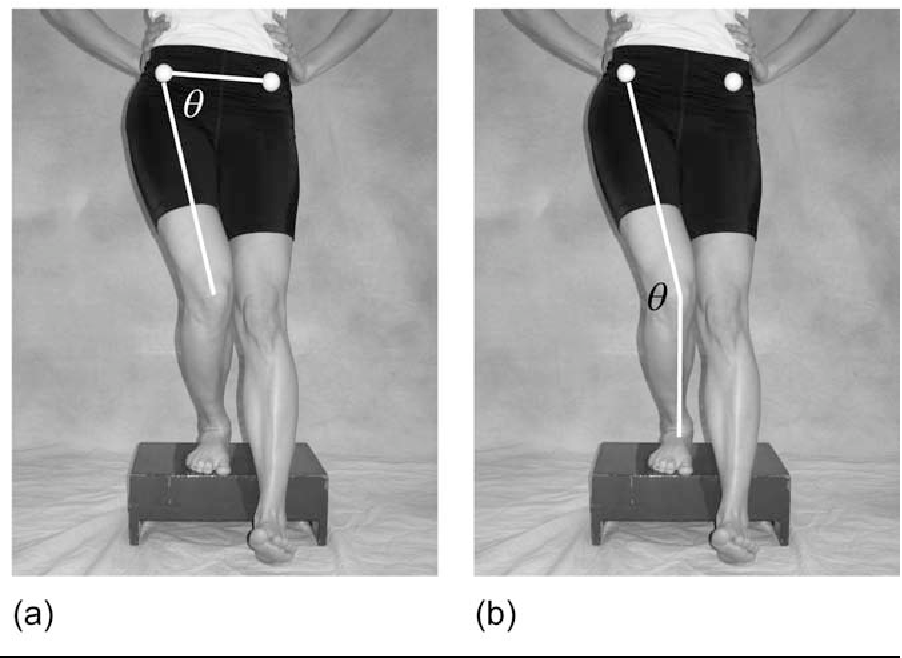
This test checks the strength and control of your thigh muscle (quadriceps) while your knee bends under load.
- How to do it: Stand on a low step or stair on one foot. Let your other foot hang off the edge. Slowly bend your standing knee to lower your floating heel toward the floor. Touch the floor lightly, then push back up to the starting position.
- What to watch for: Does your knee cave inward? Does your hip drop out? Can you control the downward movement without shaking or dropping fast?
- Goal: Aim for 10 smooth, controlled reps on each side.
What the results of the tests mean:
Knee collapsing inwards (Valgus Collapse) indicates a weakness in your hip stabilizers, specifically the gluteus medius.
- The Cause: When your hip muscles are weak, they fail to pull your thigh bone outward. This forces your thigh to rotate inward, pulling the knee with it.
- The Knee Pain Link: This inward twist places high mechanical stress on your kneecap tracking, which is a major trigger for front knee pain during squats.
Your Next Step: Build Better Movement
These tests aren’t just useful for identifying potential deficits—they can also be used as simple exercises to help address and improve the areas where you may be lacking mobility, stability, control, or strength. By regularly working on these identified deficits, you can gradually build better movement patterns and improve how your hip, knee, and ankle work together during exercises like the squat.
However, self-assessment is only the first step. If you’re unsure what your results mean, need help choosing the right exercises, or want a more personalised approach to managing your pain, book a consultation with us. We can help clarify your findings, identify the key factors contributing to your symptoms, and guide you through exercises that are appropriate for your individual needs and goals.